Monday, 12 May 2014

British American Football - The View From A Rookie

It was a hazy February Sunday morning in 2013. Bitterly cold, rain in the air; the kind of weather making you want to stay in bed for one more hour. Not for 40 or so men in Colchester. Known as the Gladiators, these men were getting ready for the first training session of the year in their quest to become British American football’s best team.

And I was joining them for the first time.

Now do not get me wrong, I am hardly what you would call athletic. Writing this a year on, and sure I am in fairly good shape, more so now. Then though, I was weighing at my heaviest and had not played a competitive sport for roughly two years. So you can understand that I had reservations about quite what I was letting myself in for.

Quickly, I learnt the ropes about what was expected of me and the training that it would involve. This would be training twice a week with the Gladiators on top of regular exercise and weight training on my own in the gym. I inwardly groaned at the prospect of no longer eating and drinking quite what I wanted, and not being able to laze around all day. However, I had challenged myself to succeed, so I became determined to do my utmost to be in the best shape possible to help contribute to the team.

After the couple weeks of learning the fundamentals of the game, I was assigned a position: linebacker. As a quick summary of my role, it basically involves running head first into the opposition, preferably the guy with the ball. While trying to do that, you had to be aware of their guys trying to take you out too. The first thing I noticed was just how small the rest of my “unit” made me look. “More gym time needed” was the mental note I made. This was brought to my attention fairly swiftly, spending the rest of the training session gingerly picking myself up off the floor every minute. As a guy that was used to rugby, it still surprised me just how physical the game was.

As the pre-season went on, I quickly bonded with the team, garnering myself nicknames based on my surname (particular favourites being: VenDiesel and VenDiagram), and also earning myself the hashtag: #DoingAVenables, for reasons that I will not divulge in a public domain. The team became almost like a second family, spending my weekends with them training and then having dinner or working out.

I finally got my first taste of a competitive game that pre-season, as I was sent on for the second half against Sussex Thunder. Sure enough, my rookie experience shone through, and I assure there is very little more daunting than hearing “run at the rookie” coming from the opposition line. The perfect response would be to stuff them on the line on the next play. The reality was probably different, but in my mind, ending up in a pile on the next tackle was close enough.

You also quickly learn to appreciate travelling. With trips to Maidstone, Milton Keynes and Southampton amongst others, knowing how to travel became paramount. My method was to stock up on pre-game nutrition (probably a Snickers, hardly scientific) and to listen to music, adrenaline preventing me from getting any sleep. The same could not be said for others, who somehow managed to get shut-eye for entire journeys, or who chose to spend the entire trip discussing their previous week. After the final away game of the year, we had a rookie showcase on the coach. The premise was simple, each new rookie had to either - tell a joke, sing a song, or tell an embarrassing story. Not feeling my comedy legs, and having the musical talent of a teaspoon, I went embarrassing story. Judging by the guffawing afterwards, apparently, my comedy legs were stronger than I thought. However, my story was trumped somewhat by another story involving a student halls party and unwanted bodily processes. I will let your imagination fill in the blanks. This was all in the name of team bonding, of course.

The season itself went incredibly well for the team. Unbeaten throughout the regular season, the Gladiators made the playoffs, winning against Bristol Apache at home, and then suffocating Solent Thrashers in a close match down in Southampton. With those two victories, we were guaranteed promotion and a place in the National League final. Unfortunately, my participation was cut short in these games after sustaining a knee injury playing football weeks earlier. However with the prospect of a final to still play, my attention turned to being fit for that.

The team travelled to Leeds the day before the final, in October. Having to make your own way there and staying at a Travelodge, it did not quite have the glamour of say the FA Cup final. But to us, it was everything. It could be our crowning glory, our icing on our football cake. Taking to the field for the game will be a feeling I could never forget. So much had changed for me personally in that time; I harked back to that first training session of the year in February. This time, I felt like I belonged, part of something special. We had players used to playing in finals before, the most surprising being a player by the name of Tim Rowe, who had played in the last Gladiators final victory in 1988. Aside from him, no-one else had ever won a title before, so we were desperate to cap off our undefeated season with one final victory.

With this, we lined up facing our fans (around 1000 people watched the final, with commentary from Sky Sport’s Neil Reynolds and Gridiron TV), and belted out the national anthem. Now it felt like an FA Cup final.

At half time, the scores were tied. The opposition, the Gateshead Senators, were lucky to be within sight of us. We were determined to go and score early and put the game to bed.

We did exactly that.

A 33-13 victory was momentous. Much celebrating ensued, with medals and a trophy being presented to us in the stand. The changing room afterwards was a sight to behold, drinks flowing and shouting being heard all around the Midlands no doubt. One thought remained with me though, even the day after on the way back: That was it for the year. These guys who I had grown to know every week from February onward suddenly would disappear for four months until the start of the next season. It was actually a little bit sad. Again, reflecting on the year that had gone, I bore the physical scars of the game, but mentally, letting go was tougher. I was aware that I was going to be in London for the start of next season, unsure of my place in the team and what my availability would be. Even in celebration, there was time for doubt.

2014 has seen my role on the team diminished due to commitments outside of football. That said, the team that remained still laced up their cleats for that cold, damp February training session. Fresh determination pierced the air, looking to solidify our place in the Premier League; new objectives were laid out, new rookies to experience what I felt during my first season. Not just for the love of American football, but for your teammates, your brothers in arms, willing to lay everything on the line to succeed. That is what sport is about, after all.


Racism In Football - Jacek Purski (Never Again) Interview


An interview discussing racism in football and multiculturalism in Poland with Jacek Purski from Nigdy Więcej (Never Again).


Sunday, 11 May 2014

Competing In Turbulent Environments: Lessons from Formula One

Formula One has always been about more than just the racing. Its development from small, basic machines carting around tracks in the middle of nowhere, to the futuristic, hybrid powered turbo charged hyper-machines being steered around expansive circuits in the busiest and brightest of locations is abundantly clear. 

As an industry, its worth, over $4 billion, far surpasses that of any competitor (GP2 is worth the equivalent of $300 million). As the pinnacle of open-wheel racing, the phenomenon attracts investment from far and wide, but it’s not a given that Formula One is a successful business at it could be. Off the back of a global financial crisis, though, Formula One remarkably keeps turning a profit.

Christian Sylt, co-author of “Formula Money”, attributes these successes to the money generated by having races in emerging markets. “$500 million is generated from the circuits, with many contracts including clauses that increase the rates 10% annually,” Sylt says. 

With the teams not agreeing to race more than 20 times a season, there is pressure to suck as much money out of every even as possible. This is why, Sylt states, that more and more races were taken: “Into emerging markets, as it provides a good way to drive tourism for that country, and make you look credible as a sporting nation.”

However, Joe Saward, F1 blogger, described Formula One, as a business, “dysfunctional”. The business model is “not diverse enough,” he says, “Technology should be used to explore other sectors; many of the costs of Formula One don’t produce value for the fans that pay to watch the spectacle.” 

The clear objective of Formula One is to win. To do that, the teams need to have the fastest car, it is that simple. Saward says that “it is about knowing that every penny spent” achieves that objective.

Despite Saward’s criticisms, there is some evidence that the vast amount of money pumped into developing technology within Formula One does reach into everyday life, varying the business model. Paolo Aversa, Cass Business School’s Marie Curie Research Fellow at the faculty of management, points to the fact that in healthcare, Formula One’s contribution is striking.

“ECU’s developed from Formula One cars are used to monitor heart patients at Birmingham children’s hospital,” Aversa states. “Also, Formula One technology has been adapted to stream data from ambulances to hospitals so doctors can begin the diagnosis procedure en route to hospital.”

According to Nick Fry, former CEO of Mercedes Grand Prix, the Formula One business isn’t just about having more money either. “You have to have the right people, the best people. Never stand in the way of them,” he said. From any business, it is clear that the most successful have strong leadership and the correct people in the highest placed jobs, in order to maximise potential and growth.

 This parallel is displayed vividly in Formula One, with Dr Amanda Goodall, senior lecturer in management at Cass business school, saying “Formula One teams managed by former drivers or mechanics had a 16% higher chance of wins and podiums than those without.” Despite this making sense on paper, the reality sometimes does not fit the mould. Jackie Stewart and Alain Prost were fantastic racers, but their respective teams (named after their surnames) did not fare well at all, with Stewart Grand Prix being sold to Ford after amassing only one win in three seasons, and Prost Grand Prix going bankrupt after five seasons and no wins.

Money still plays a role in the growth of Formula One as a business, however. It can be a mixed bag though. Teams need sponsorship to help increase revenue and develop the cars more ably, whereas sponsoring Formula One as a business is far-more risk free. Therefore, it leaves teams that don’t compete at the sharp end of the constructer’s championship at risk of having a lack of funding. 

This is most recently evidenced by the increase in drivers being hired by teams due to the money they can bring in via sponsors, rather than their ability to win races. Pastor Maldonado, for example, left Williams (where he was generally regarded as a liability) to move to Lotus, who were in desperate need of funding for the 2014 season. Despite there being more “qualified” drivers available; Lotus took the driver that could bring in the most revenue. Needless to say, Maldonado, to date, still has not scored a single point in the 2014 season. 

This need for funding puts teams in direct conflict with their primary objective, says Sylt: “To try and win races.” Saward agrees with Sylt’s point, stating that due to the financial restrictions of the teams competing; only “two teams on the grid exist purely to go racing.”


As for the future, Formula One still wants to carry on expanding and increasing its exposure. 2014 sees Russia hosting a race for the first time in Sochi, the same venue as the Winter Olympics, and South Africa might return to the calendar for the first time since 1993. The increased focus on the spectacle outside the car does run the risk of alienating those who prefer the “classic” races of Monza and Monaco, but Formula One has long taken the view that expansion must come first if, as a business, it is to thrive.

Wednesday, 19 February 2014

The Armstrong Lie - A Review

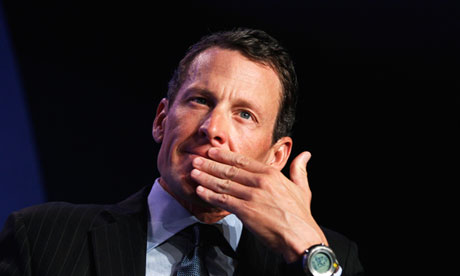
In a rare moment (cough, cough) of downtime last night I went to catch the documentary chronicling Lance Armstrong's unraveling at the hands of USADA and subsequent stripping of all his Tour de France wins. While taking the film in, an idea popped into my head of reviewing the film for other people to read and to hopefully make them decide if they too want to view it or not. This also came off the back of people telling me to go into the movie reviewing business after complaining loudly in the New Year that there were "so many films I have to go and see". So, here's my first stab at one. If you're looking for a star rating, there is none. I'm sorry but my rating would probably be wildly different from someone else's, and this is purely my take on what I thought of the film. Therefore I deemed it unfair that I should have too much of a decisive say, one way or the other. So here we go, enjoy reading and let me know what you think!

The Armstrong Lie – A Review.


In 2009, seven time Tour de France winner Lance Armstrong announced his return to competitive cycling with the sole aim of taking part in that year’s edition of the famous road race and, ultimately, winning it. One man who followed him every step of the way was film director Alex Gibney, who was intrigued by this man's “miraculous” return to the sport he had previously dominated for the better part of a decade. What was going to be a positive appraisal of Armstrong’s comeback, indeed the working title of the documentary was called “The Road Back”, quickly turned on its head when the doping revelations and subsequent confessions sent the legendary cyclist’s reputation into free-fall. Gibney went back to face Armstrong in 2012 to demand answers as to why he kept up his lie for so long.

Gibney mixes his original footage from the 2009 season, starting with Armstrong’s comeback announcement in the January right through to the culmination of the Tour de France, with interviews of Armstrong pre and post confession, along with interviews from a host of other names within cycling who either worked with, pursued or testified against the Texan. Most specifically, he speaks to George Hincapie, former teammate of Armstrong and the Andreu’s, Frankie and Betsy, who were pivotal in Armstrong’s eventual downfall. However, the most interesting (to cycling fans at least) of the interviewees is Dr Michele Ferrari, a man with a notorious reputation with being hard to get a word out of. Though the interviews take place in a time where Armstrong’s name isn’t being dragged through the mud, you can tell why Ferrari avoided media attention whenever he could. Maybe it’s just the cynic in me who holds him partially responsible for cycling’s inherent problem with doping, this is the man that taught Armstrong how to do it after all, but he just gives off an air of shadiness, like there was something more he knew about but didn’t want to let on.

Michele Ferrari - Armstrong's doctor and doping mastermind

The documentary builds Armstrong up purely to tear him down with consistent ease. He goes from all conquering cancer survivor to doper extraordinaire, from a charitable, good intentioned patron to a meticulous and malicious bully. But herein lies the fundamental problem with the film. It doesn’t know what it’s trying to be. It’s obvious that Gibney, like many others, was a huge Armstrong fan and like many of us, he’s also probably struggling to comprehend the web of lies that he spun. But in constantly flipping from good to bad Lance, you are torn between empathy and disgust for him. The film’s title, the interviews, all of them point at you hating Armstrong, but the film just doesn’t allow you to do that.

Armstrong donning his foundations' colours

As a cycling fan, I was also disappointed by the lack of revelations that the film exposed. Besides one part referring to his climb up Mount Ventoux on his comeback, there was nothing ground breaking regarding his confession or “lies” about his return. Though I will admit that I may be being harsh as I’ve kept as close an eye as anyone on this story and know my research, I was still surprised that a man who spent such an extended period of time in close quarters with someone like Armstrong, and with all the interviews he sought, didn’t rumble anything new. That said, if you were just a casual observer or not a die-hard fan of the sport, then this film does actually offer quite a well-rounded view of how Armstrong’s lie “unraveled”. 2009 also happened to be Bradley Wiggins’ “break out” Tour de France, so there’s a fair smattering of him in the documentary too, for the British observer.


In the end, The Armstrong Lie offers viewers a 129 minute look at a man’s legacy that spans nearly 20 years, from the moment he races professionally for the first time, to his legacy’s peak and reign on top of the cycling world, and to ultimately, the demise of that legacy with the USADA findings in August 2012. Gibney does a great job in making the documentary accessible and engaging throughout and by keeping a constant thread, no mean feat considering this was going to be an entirely different film to begin with. Though lacking the hard hitting punch that some fans are craving, it’s still a good biopic of a man who, as the film puts it, “simply wanted to win too many times.